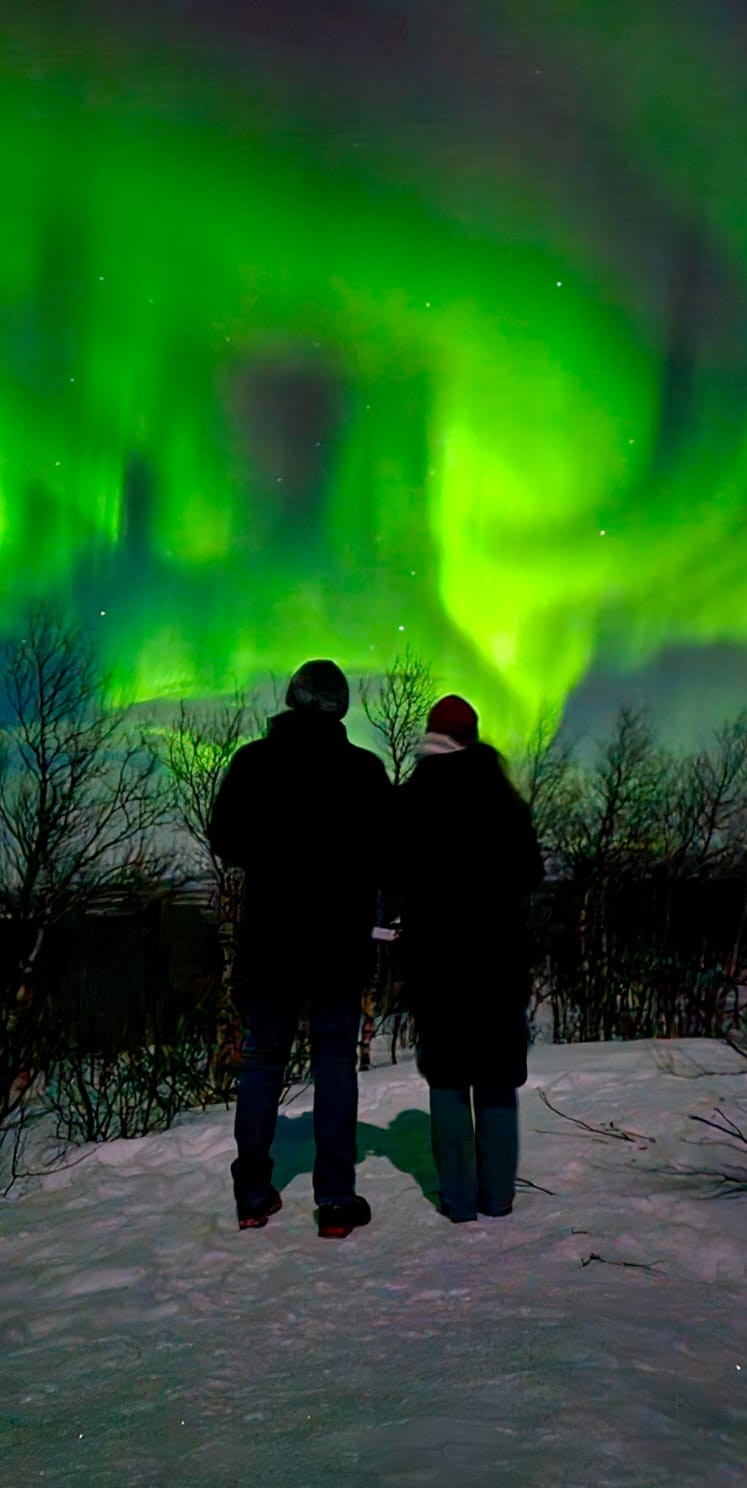
Aurora season in Kiruna runs from early September to mid-April. But within those 7 months, conditions vary enormously. This guide breaks down every month using public historical data — NOAA SWPC KP records and SMHI weather statistics for the Kiruna area — combined with our guides' experience of local conditions.
Quick comparison table
The figures below are approximate historical monthly averages compiled from public sources (NOAA SWPC for geomagnetic activity, SMHI for cloud and temperature, astronomical darkness calculated for 67.8° N) — they are planning guidance, not a forecast for your specific dates.
| Month | Dark hours | Avg cloud | Avg low temp | Overall |
|---|---|---|---|---|
| September | 5 | 60% | +2°C | ★★★ |
| October | 9 | 55% | −3°C | ★★★★ |
| November | 15 | 65% | −12°C | ★★ |
| December | 24 (polar night) | 55% | −18°C | ★★★★ |
| January | 14-24 | 48% | −22°C | ★★★★★ |
| February | 12 | 40% | −20°C | ★★★★★ |
| March | 8 | 45% | −14°C | ★★★★ |
| Early April | 5 | 50% | −5°C | ★★★ |
September — the soft opening
Season officially starts around 1 September when astronomical twilight returns. Dark hours are short (5), but geomagnetic activity is statistically somewhat elevated around the equinoxes (the "Russell–McPherron effect") — a tendency in the averages, not a guarantee for any given week. Temperatures are still mild (+5 to −5°C) and the birch forests are in peak autumn colour. You can photograph aurora over gold-yellow landscapes — a look you can't get in mid-winter when everything is monochrome white.
Strategy: book for the last 10 days of September to maximise dark hours. Don't expect the skies to cooperate every night — cloud cover is still 55-65%.
October — the underdog
October is the most underrated aurora month in Kiruna. Tourist volume is low, flights and accommodation are often cheaper than in the holiday weeks, weather is mild enough that you don't need extreme gear, and dark hours are already 9. The autumn equinox solar activity spike often extends through mid-October.
Strategy: 3-4 night stay, second half of October. Budget travellers: this is your month.
November — skip unless you must
November is the trap month. Cloud cover peaks at 65% (worst of the year), solar activity often dips post-equinox, and temperatures are already getting unpleasant without the compensating dry air of mid-winter. Tour prices rise in anticipation of December. Unless you have a specific reason, push to late October or early December.
Strategy: if you must come, plan 4+ nights to compensate for weather risk.
December — polar night and Christmas crowds
Polar night arrives around 12 December. The sun doesn't rise for ~20 days. You can aurora-hunt from 14:00 if skies are clear. Cloud cover improves as temperatures drop (cold air holds less moisture). Christmas and New Year fill up early at many Kiruna accommodations and tours — book well ahead, or if you're flexible, come the first week of December before the crowds.
Strategy: first week of December gives near-January conditions at November prices. Otherwise book 3+ months ahead for the holiday weeks.
Check tour availability → Kiruna Northern Lights Tour — from 1490 SEK per adult. Final price may vary by date.January — the quiet peak
January is where Kiruna hits its stride. Temperatures run −15 to −30°C. Air is bone-dry (excellent visibility). Cloud cover drops. Christmas wave has passed and the season is at full operational tempo. For photographers and anyone wanting small groups, January is our top recommendation.
Strategy: the sweet spot is January 8-25. Avoid school-holiday weeks unless you want families with kids.
February — statistical best
If you only get one shot, come in February. Every metric aligns: solar activity builds through the current cycle, cloud cover hits its annual low of 40%, astronomical nights are still 12 hours long. Temperatures are brutal (−25°C normal, −35°C possible) but the air is so dry you feel it less than +5°C in London rain.
February also leads into the spring-equinox period, when geomagnetic activity is statistically somewhat elevated (the Russell–McPherron effect) — a statistical tendency, not a promise for your specific dates.
Strategy: book 3+ nights in mid-February — in the historical averages it is the strongest all-round month of the Kiruna season.
March — last great month
Close to February in quality, with better weather. Days are lengthening but you still have 8 hours of darkness in mid-March. Around the spring equinox (around March 20) geomagnetic activity is statistically somewhat elevated — good news on average, though never a guarantee for a specific night. Temperatures are more tolerable (−10 to −15°C typical).
By late March you can also start doing daylight activities like our Abisko Day Tour because the sun is up until 19:00+.
Strategy: March 15-25 targets the equinox window. Good for travellers who can't handle February cold.
Early April — the last call
Season closes around 10-15 April. Nights shrink rapidly. By the 20th Kiruna is in permanent astronomical twilight (no true darkness). But early April can deliver — April 2023 produced a G4 geomagnetic storm on the 10th. Come only for the first week of the month.
Strategy: April 1-8 only. After that, book autumn instead.
The single week most first-timers get wrong
The first week of November. Everyone books it because it's "official aurora season" + pre-Christmas prices. But in the historical averages it is one of the weakest weeks of the season: cloud cover near its peak, solar activity often in a post-equinox lull. Shift your booking 3-4 weeks earlier (late October) or later (first week of December).
Use the live forecast
Whatever month you choose, check the live aurora forecast for Kiruna 48 hours before your tour. If the forecast looks poor, contact us before the tour. Any cancellation or date change follows the terms shown at booking and depends on availability.
Book a guided night out → Hotel pickup, warm drinks, basic phone photo help when possible.